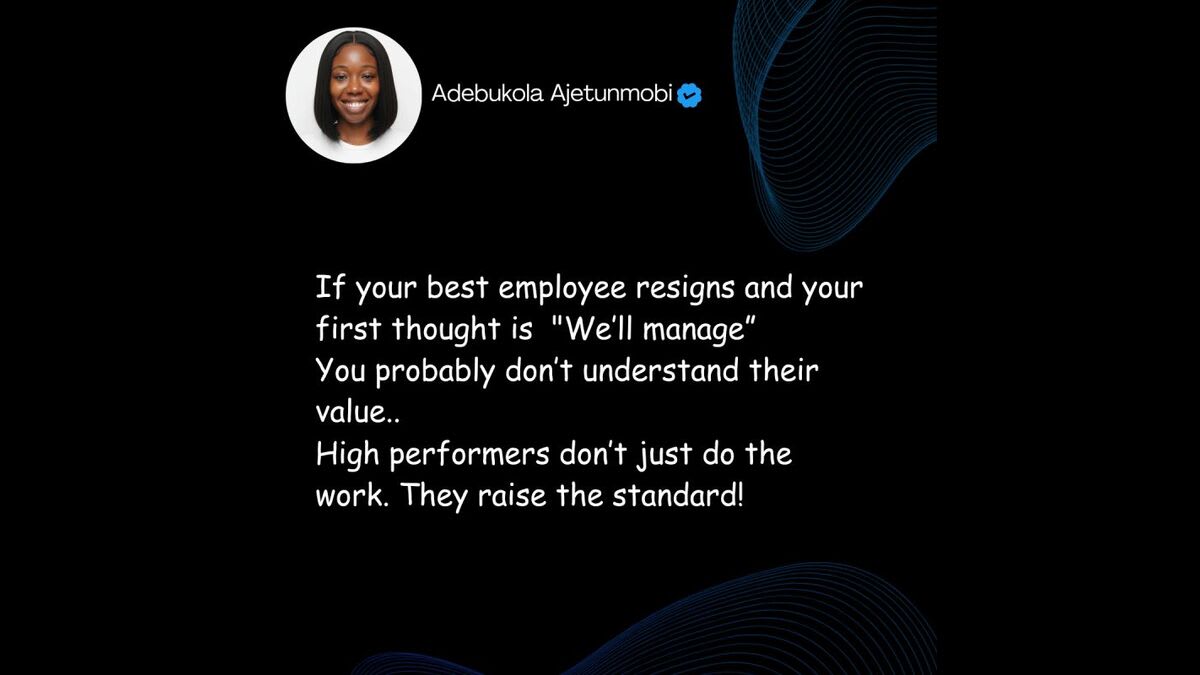
When a high performer leaves, the first thought is often, “We’ll manage.”
But sometimes, you only realize how valuable someone was after they are gone.
A high performer is not always the person making the most noise in the workplace.
Sometimes, they are the person quietly making things work.
They complete their tasks, but they also do much more.
They raise the standard of work around them. They solve problems before they become bigger issues. They support their teammates. They take ownership. And they often know what needs to be done without waiting for someone to tell them.
That kind of impact can easily become invisible.
The work gets done, so nobody notices
When someone consistently performs well, their work can start to feel normal.
Deadlines are met.
Problems are solved.
Projects move forward.
Mistakes are avoided.
Because everything seems to be working, leadership may not always stop to ask why.
Sometimes, the answer is simply: someone is making it work.
You notice their value when they leave
This is where some companies get the biggest surprise.
A high performer resigns, and the company thinks, “We’ll just hire someone else.”
But after they leave, things may start to change.
Tasks take longer.
Problems that were previously handled quickly now need management attention.
Other team members need more support.
Projects lose momentum.
And suddenly, everyone starts asking questions about things that used to happen smoothly.
That is when their impact becomes clear.
Replacing a role is not the same as replacing impact
Hiring someone with the same job title does not automatically replace what the previous employee brought to the company.
The new person needs time to learn the role, understand the team, build relationships and understand how things are done.
Even if they are highly skilled, they still have to find their rhythm.
That takes time.
This is why losing a high performer is not simply about filling a vacant position.
It can mean losing momentum, experience, trust and stability.
Pay attention before they leave
Companies should not wait until an employee resigns before recognizing their value.
Pay attention to the people who consistently make things better.
Who solves problems without being asked?
Who can be trusted with important responsibilities?
Who helps other team members perform better?
Who takes ownership when things go wrong?
Who can work independently and still deliver?
Those contributions matter.
And employees should not have to leave before the company realizes how much they were contributing.
Final Thought
A high performer may not always announce their impact.
Sometimes, their biggest contribution is simply making difficult things look easy.
So if your best employee left tomorrow, would your team simply replace their position, or would you realize that you had been replacing their impact all along?